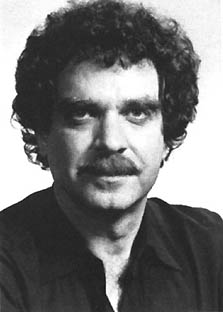
Image from the Denver Public Library's exhibition of Hentry Lowenstein's theatrical designs and drawings.
January 21 - March 29,2009 The Denver Public Library is hosting an exhibition focused on the theatrical designs of Henry Lowenstein, a well known member of the Denver theatre community. The exhibition will be located at the Central Library on level 5 in the Gates Reading Room.
The Gate Reading Room at the main branch of The Denver Public Library
I had the opportunity to work with Mr. Lowenstein while I was in middle school. It was my honor to spend two summers while in middle school performing and working as a technician at the Denver Civic Theatre, which was founded and at the time operated by Mr. Lowenstein. I had the opportunity to work with him directly while hanging lights for The Mikado which was part of a series of plays Henry produced during the summer months and in association with the Denver Public School system. One of Mr. Lowensein's theatrical drawings.
I am looking forward to this exhibition and the rare opportunity to see a selection of his drawings and theatrical designs.
Interactive installation created in collaborations between MMEx, CAVI at the University of Aarhus and in cooperation with the Cultural History Museum in Randers.
The video above documents and explains an interactive installation which is currently on display at the Cultural History Museum in Randers, Denmark. While I originally found reference to this work on Gizmodo, there is also a wonderful write up on the piece available at the CAVI website.
As described on the CAVI website "Once a spectator approaches the stone, it immediately lights up and becomes a canvas for the narration. The first part of the sequence is an animation telling the dramatic story of Eskil and Thore, who drowned during a violent storm. The second part simulates the runes being carved by Eskil’s father, Åne, followed by a sequence of various effects that illustrate the passage of time and the different seasons. Eventually, the stone cracks and reveals the runes in flames."
This installation is very successful in engaging a museum patron with the story and personal meaning an artifact over 1000 years old. Here the juxtaposition between possible presentations, multimedia verses the more traditional use of an index card (or even a pre-recorded audio tour) presents a clear signpost pointing towards the future of multimedia design, application, and utility. Anyone involved in the crafts of storytelling who is interested in the use of multimedia should find a wealth of inspiration from this project. Through the narrative and interactive elements of the installation, the runic stone is given a performative life and spirit. The artifact now extends its influence beyond the mind and into the body of those interacting with it.
A few posts back I was contemplating the need of advanced projection techniques and other technologies in a production. I even quoted Lori Anderson asking if the world even needs another multimedia show. While this is an installation and not a multimedia show, it is a wonderful example of how the use advanced multimedia techniques can be directly utilized in the service of storytelling and revitalizing a personal connection with the content of a story. This work can directly inform theatre practitioners, as well as installation artist, and museum curators.
We are living in a time such as when Wagner and Adolpha were developing the use of light in the theatre. I strongly believe that the great new vocabularies and possibilities in performance and story telling are hiding within known technology and are slowly being revealed in the folds of work such as this interactive runic stone.
---
Also of note from the CAVI website is this piece: Big Shadow
I am running out of time this morning to blog further, but I feel as though it is worth pointing out as it incorporates live performance, digital augmentation of shadow, and a web-presence aspect that are very intriguing. This work, as well as the interactive runic stone are very inspiring to me and directly speak to my core interests as a director, designer, and performance creator.
Image explaining a new technology that allows a computer to reconstruct images from blood flow in the brain. Source: ChunichiWEB
I just found a very interesting blog post on The Pink Tentacle. Apparently Japan based ATR Computational Neuroscience Laboratories announced on December 11th that they have developed a method of brain analysis that uses an MRI scanner to detect the flow of blood in the brain and in turn reconstruct images that are being seen by the brain.
The shapes on the top are the original images shown to participants to establish a data set. The letters on the bottom, previously unused, were reconstructed from the blood flow in the brain. Source: ChunichiWEB
One of the exciting aspects of this research is that it does not seem to completely rely on 'parroting.' That is, subjects were shown 10x10 pixel images while being scanned which provided a data set based on the original images. But then the subjects were scanned while looking at previously unused 10x10 pixel images and the machine was able to decipher the new imagery in a recognizable way.
Apparently the researchers working on this recognize that the technology can be applied in the fields of art and design, which was my first thought. Just imagine if we could see into shapes and images running through Pollock's mind? Let alone the conceptual work that can be done with this type of interface. There is also the suggestion from the researchers that the technology might aid in the therapy of those who suffer hallucinations or other psychiatric disorders.
The researchers suggest that in around 10 years, with increased sensitivity in their sensors, this type of technology has the potential to allow a machine to read not only the imagery in our heads, but all of our senses and emotions into meaningful information that can be displayed on a computer screen. While the artistic applications this kind technology offer is exciting, it seems as though there are some serious privacy issues invovled with this as well. Indeed, what would it mean if waterboarding was replaced by forced brain analysis?
You can find the research article written by the people behind this technology in the December 10 issue of the US based science journal Nuron.
"Canst thou not minister to a mind diseased; Pluck from the memory a rooted sorrow; Raze out the written troubles of the brain; And, with some sweet oblivious antidote, Cleanse the stuffed bosom of that perilous stuff Which weighs upon the heart?"
I am working on part 3 of my notes on Youngblood, however I wandered upon some exciting news from Lev Manovich which I want to share. Manovich is a contemporary of Youngblood and he is now distributing his new book "Software Takes Command" under a Creative Commons license on his website. I find this exciting because it offers a detailed look into Software Studies which I feel is a very important emerging field.
As noted on Manovich's Software Studies Initiative page the first book to use the term Software Studies was in Software Studies: A Lexicon edited by Matthew Fuller and published by MIT Press.
Software Studies is a new field of research that focuses on the 'underlying engine' that is driving all aspects of the IT revolution. Manovich and his crew argue that:
"...if we continue to limit critical discussions to the notions of 'cyber,' 'digital,' 'new media,' or 'Internet,' we are in danger of always dealing only with effects rather then causes; the output that appears on a computer screen rather than the programs and social cultures that reduces these outputs." From the description of Software Studies found here.
I can see this in my use of Isadora or even the interface I am using to post to this blog. I often describe Isadora, EyesWeb and programs in general as tools. However the very nature of the tools that I use, in turn define the realization of the concepts I work on with them. The interactive behavior that I desire to bring to the physical space of my performances is mediated through the options provided to me from my tools, and indeed the head of the nails I carefully place derive their form from the hammer made to drive them. Perhaps this hammer/nail metaphor is not the best, but I can directly see that to ignore the tool and focus on the final constructions is to be divorced from the matrix our constructions are filtered through.
So, how does one go about approaching software studies? How can I analize Isadora, or any of the other tools I am using in my art and performance studies in a meaningful way? Well, I guess it is time to start reading Lev's book...
"...'software studies' translates into two complementary research paradigms. On the one hand, we want to study software and cyberinfrastructure using approaches from humanities, cultural criticism, and social science. On the other had, we want to bring software-based research methods and cutting-edge cyberinfrastructure tools and resources or the study of the new domain where they have not been applied so far - large sets of cultural data." From the description of Software Studies found here.
"A 4:00 excerpt from two collaborative 20:00 performances by Joe Grimm and Ben Russell in Gotland and Umea, Sweden. Instruments involved include a 16mm projector, flicker loops, a light-sensitive analog synthesizer, voice, and a variety of prisms and lenses." Found here.
Diagram explaining "How to Present 'Expanded Cinema' pieces by the Tape-Beatles: Image from "Horror Film 1" by Malcolm Le Grice performed at Tate Modern:
“Expanded cinema”, i.e. the expansion of the commonplace form of film on the open stage or within a space, through which the commercial-conventional sequence of filmmaking – shooting, editing (montage), and projection – is broken up, . . .the electronic, digital cinema, the simulation of space and time, the simulation of reality. . .an analysis carried out in order to discover and realize new forms of communication, the deconstruction of a dominant reality. . .The mission of the Futurists was fulfilled in the multimedia, intermedia activities of Expanded Cinema under the motto of the expanded concept of art." Excerpts from a wonderful lecture by Valie Export at "The Essential Frame - Austrian Independent Film 1955 - 2003" program of screenings held in 2003. "Expanded Cinema by Gene Youngblood (1970), the first book to consider video as an art form, was influential in establishing the field of media arts. In the book he argues that a new, expanded cinema is required for a new consciousness. He describes various types of filmmaking utilizing new technology, including film special effects, computer art, video art, multi-media environments and holography." From the Article on Youngblood on Wikipedia (Dec 4th, 2008)
". . .the historical and theoretical premise of avant-garde artists being anti-narrative can be proved unfounded by simply reviewing the practice throughout history. This is not widely available, so similar to a review of the women’s avant-garde in relation to narrative, there is a need to determine a history for experimental interactive expanded cinema that is not guided by anti-illusion, material concerns, or single screen as categories to define it. After all categorization and definition are forms of censorship that have often found their way into institutional funding and exhibition curatorship. There is no doubt that ideologies take their toll on the continuation of certain artists practice. We need to understand how this has happened in the past to optimistically look forward to a climate for radical experimentation with moving-image in the future." Excerpt from "Expanded Cinema: Some Reasons for a Review of the Avant-Garde Debates around Narrativity" by Jacki Hatfield author of "Experimental Film and Video: an anthology" and a founder of Rewind.
I found an amazingly illustrative video of Zoetrope, a tool being developed by Adobe through the University of Washington.
The idea behind Zoetrope is to provide a graphical tool that can track the changes of multiple websites and their elements through time. This allows for the quick cross-referencing of information across a large spectrum of data sources and quickly provide graphical analysis of the information. The user interface seems to be a patch programing UIassociated with a 'sand box' type web viewer that allows multiple web pages to be rendered into a single working space.
I wonder if their Zoetrope can index video streams as well, so as to allow the association of security cameras or other video sources to the other data sets they are integrating. Can I attach a security camera recording of a years worth of action in a performance space and in turn analyze it through the lens of the daily headlines and weather patterns in the area?
While I am not immediately clear on how this type of tool might play out within a performance context, I can see the use of this type of emerging research tool changing the content creation and resource development for a performance as much as it would aid in journalism, academic research and other information based processes.
The video above comes from Easyweb.fr, a group in Europe that specializes in architectural projection performances and technologies.
These projections are similar to the large out door installations Frieder Weiss has implemented in his Wishing Well and a few other installations.
The use of 3D techniques and illusions to create virtual lighting and a sense of depth in accenting and animating a static space is particularly interesting to me. While none of the examples above include a live performer, I feel as though the techniques demonstrated can directly inform the use of projections in a live performance context. The vivid, realistic and intense transformation of architecture into a moving pallet, as well as the examples provided in smaller room sized spaces directly points towards a powerful and perhaps more classically informed use of projection as lighting within narrative live performances.
This is a very interesting video demonstration of a developing video analysis and manipulation tool rolling around in the Adobe research labs. I am particularly interested in the method being used to determine separate objects moving in a video. I am also impressed at the quality of detail pulled from the low contrast source video of the people walking through the forest.
The puppetry of the video through a point based interface, which allows for the creation of virtual sliders that attach themselves to points moving in the video seems like a prime candidate for integration into a Frieder Weiss type human-controlled interactive performance space.
 Image from the Denver Public Library's exhibition of